Overview
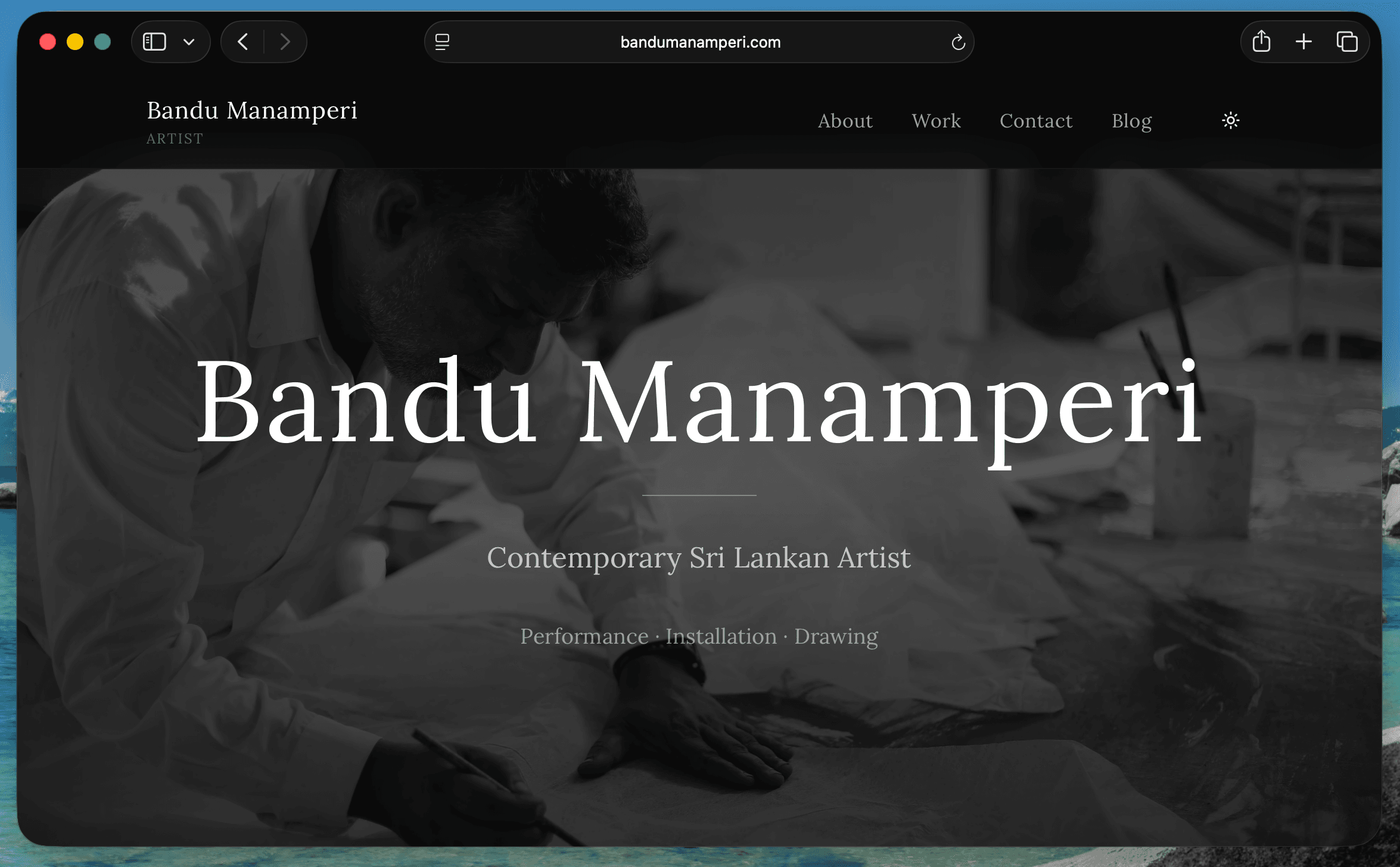
Bandu Manamperi is a Sri Lankan contemporary performance and visual artist whose practice spans durational performance, installation, sculpture, and drawing. His work has been shown internationally across decades, with affiliations including the Theertha International Artists' Collective in Colombo. He needed a digital home that matched the seriousness of that practice: one capable of presenting documentation of ephemeral performance work, physical artworks available for sale, a full exhibition record, and an ongoing biography, all within a single coherent experience.
The project was also personal. Bandu is my father, and watching him manage the administrative and representational burden of an active art practice without adequate tools is part of what eventually led me to build AetherLabs. This site came first. It was the clearest version of the problem: an artist with a decades-long body of work and no digital infrastructure worthy of it.
The brief was straightforward in scope and demanding in execution. Build a fully custom site. Build a content management system alongside it so Bandu could update his own work without developer involvement. Make it feel like the work deserves.
The Design Challenge
The core tension in designing for a fine artist is one most portfolio templates get wrong. They either err toward gallery minimalism: white space, clean grids, nothing competing with the work, or they lean into expressive, art-directed layouts that become the visual story themselves. Neither extreme worked here.
Bandu's practice is conceptually dense. Performance documentation, in particular, resists clean presentation: it is photographs of bodies in space, video stills, written scores, and material traces. The design had to create enough atmosphere to signal that this was serious artistic work, while staying structurally clear enough that a curator or collector landing on the site could find what they needed.
Typography became the primary design tool. The site uses a serif-led hierarchy with Cormorant Garamond at display scale and a lighter weight body font, chosen for its editorial register. It reads as considered rather than corporate, historical rather than fashionable. The type choices signal that the site is in conversation with the tradition of art catalogue design without copying it directly.
Colour is deliberately restrained. The palette stays in a warm neutral range, close to the feel of uncoated paper stock. Nothing competes with the photography. The layout uses generous vertical rhythm and asymmetric grid placements to give the pages a sense of pacing. Moving through the site is meant to feel like moving through an exhibition rather than scanning a product catalogue.
Every layout decision was made around a single question: does this frame the work, or does it compete with it?
Engineering
The site is built on Next.js, with Supabase handling the database, authentication, and media storage. The architecture was designed from the start around two users: the public visitor, and Bandu himself as the editor.
For the public site, Next.js server-side rendering keeps pages fast and indexable. Artwork pages, exhibition records, and biography content are all fetched from Supabase at the page level and rendered server-side, meaning search engines see full content and first-load performance stays strong regardless of connection quality.
The CMS was built from scratch. There was no third-party admin panel, no WordPress instance running in parallel, no page builder. The reasons were practical and aesthetic in equal measure. Off-the-shelf CMS tools model content the way software thinks about content: as fields in a form. The goal here was to model content the way Bandu thinks about his work: by series, by medium, by exhibition history, by period.
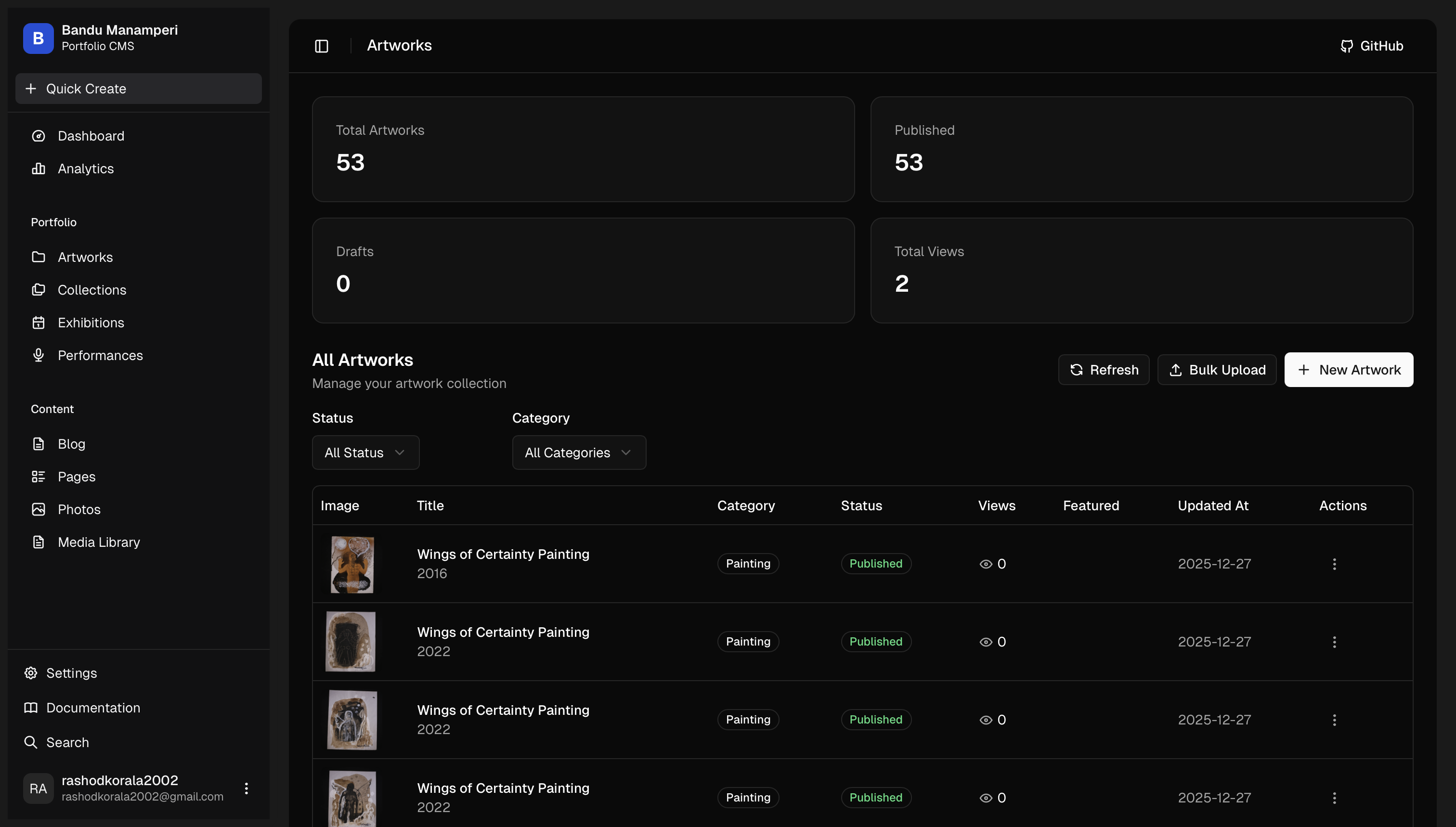
The admin interface maps directly onto those mental models. Adding a new artwork means filling in title, medium, dimensions, year, series, and uploading documentation images, the same information Bandu would include on a physical label or in a catalogue entry. Adding an exhibition means recording the title, venue, city, year, and whether it was a solo or group show. The interface is purpose-built for an artist's working vocabulary, not a generic content editor's.
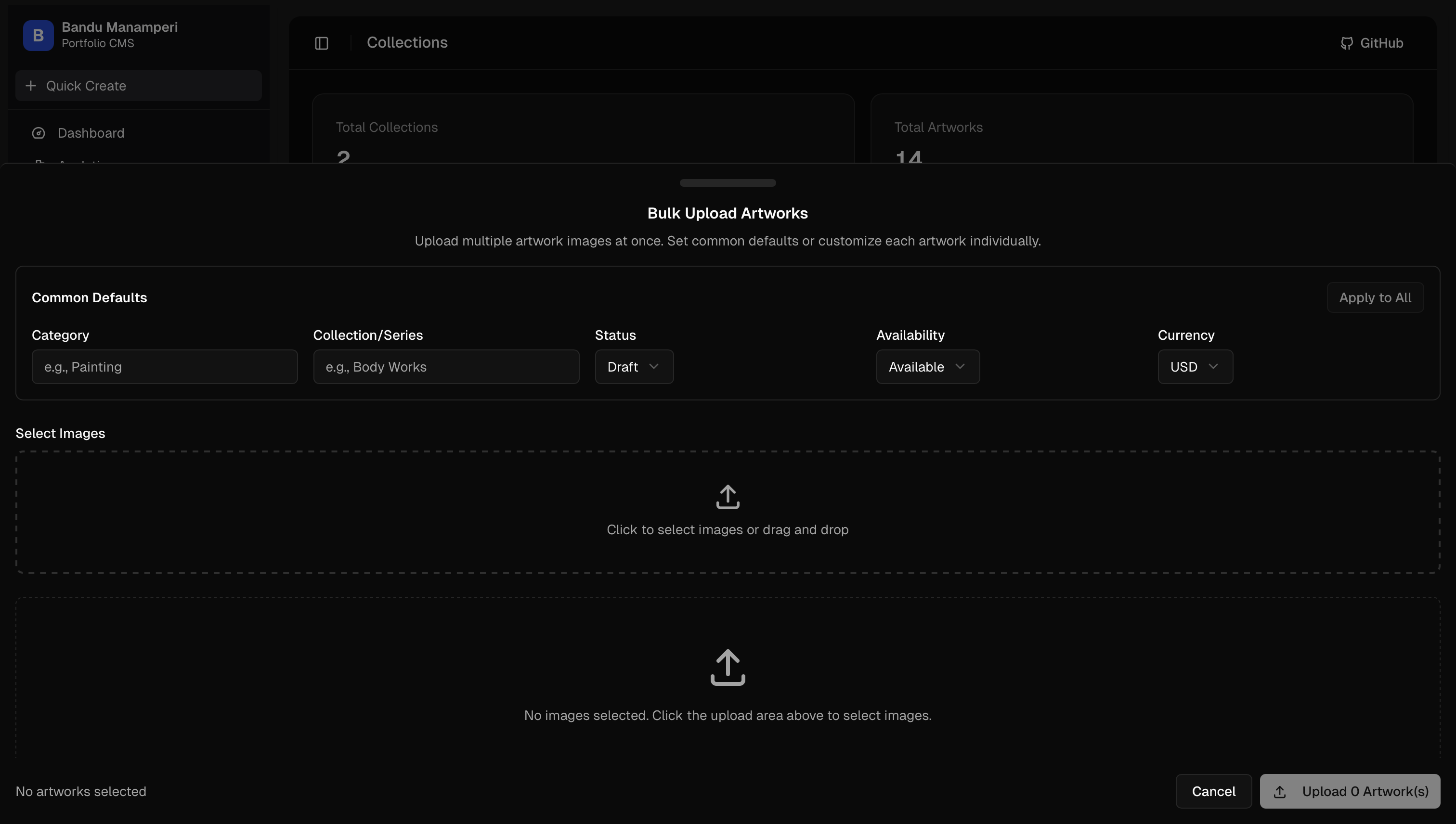
The data model covers five primary collections: artworks, exhibitions, performances, CV entries, and site settings. Each collection is designed to accommodate the specific metadata that matters for that content type. Artworks carry provenance and medium fields. Performances carry duration and location records. Exhibitions carry institutional affiliation data. Each one reflects how that category of work is actually documented and discussed in the art world, rather than mapping to a generic title-and-body-field structure.
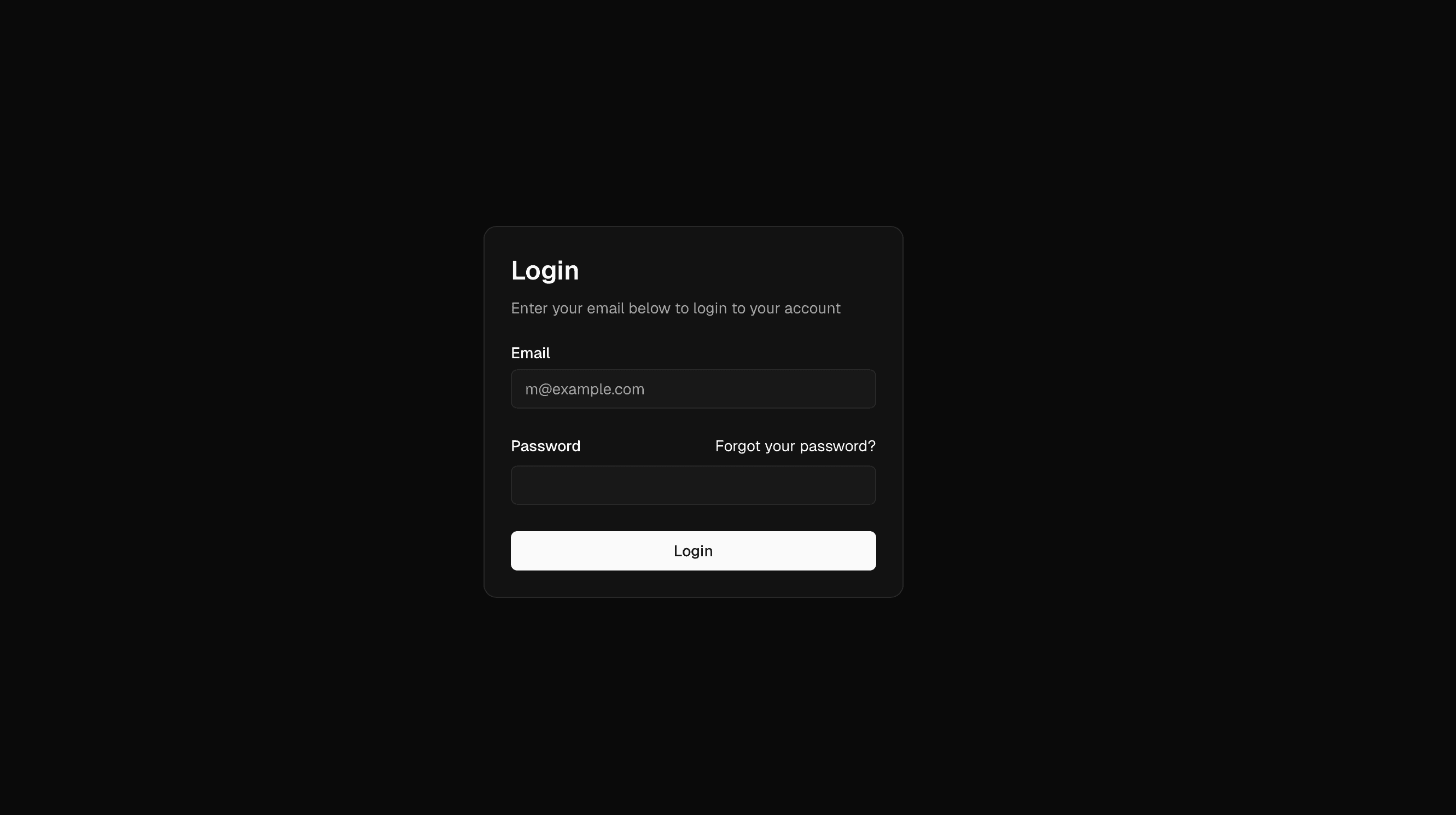
Protected routes on the admin side are gated behind Supabase Auth. Bandu logs in, makes changes, and the public site reflects them immediately. No deploys, no developer handoff, no waiting.
Outcome
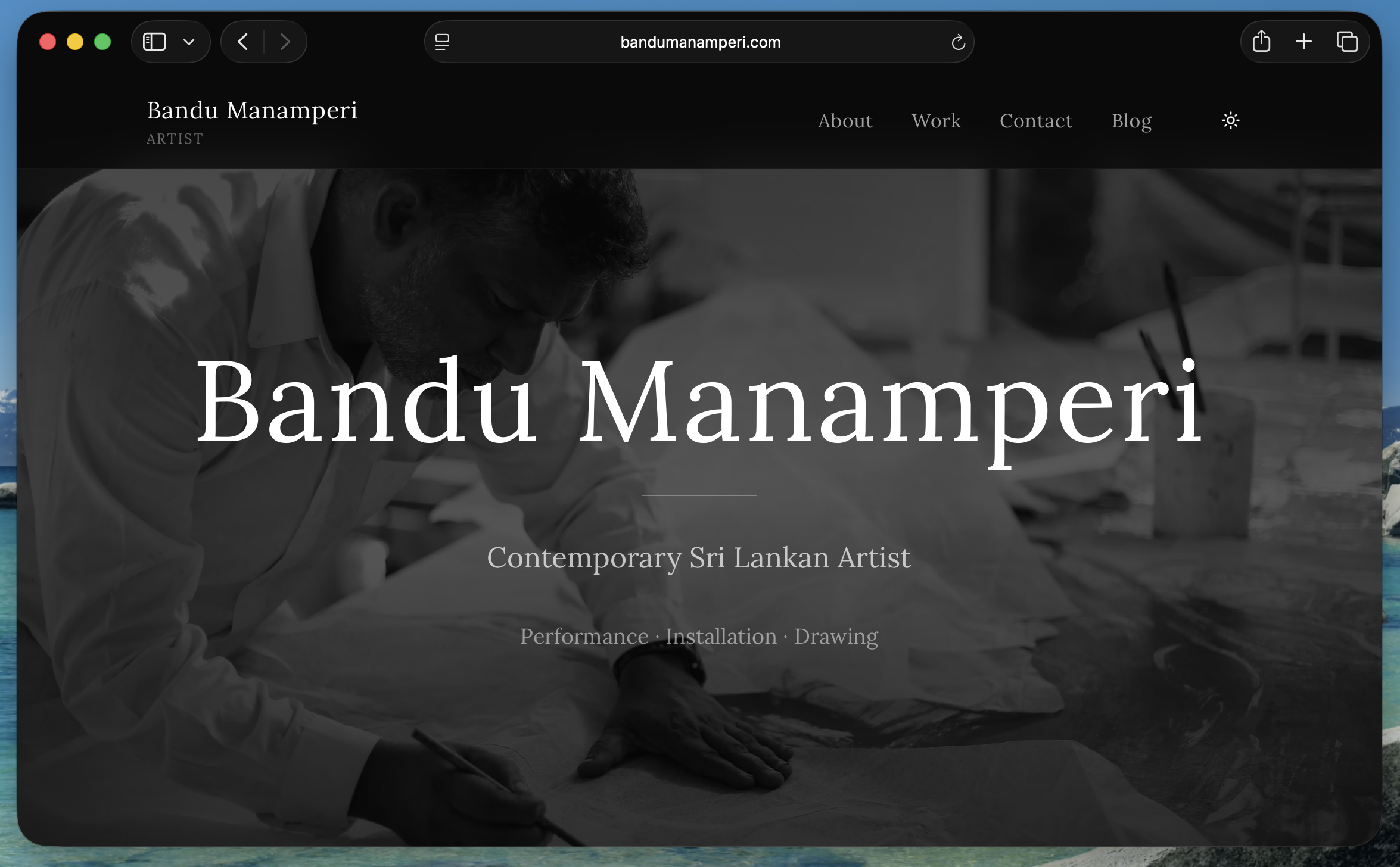
The site is fully live at bandumanamperi.com. It serves simultaneously as an archival record of a practice that spans more than two decades and as an active, up-to-date portfolio for exhibition inquiries and collector contact. Bandu manages it himself.
The project clarified something that became central to AetherLabs: the tools artists are given to represent and manage their work are almost always borrowed from adjacent industries, e-commerce platforms, blog engines, generic portfolio builders, and the fit is never quite right. Building for Bandu was the first time I worked through what it actually means to design software around how an artist thinks, rather than how a content manager does. That distinction shaped everything that came after it.
Gallery
Tools & tech stack