Overview
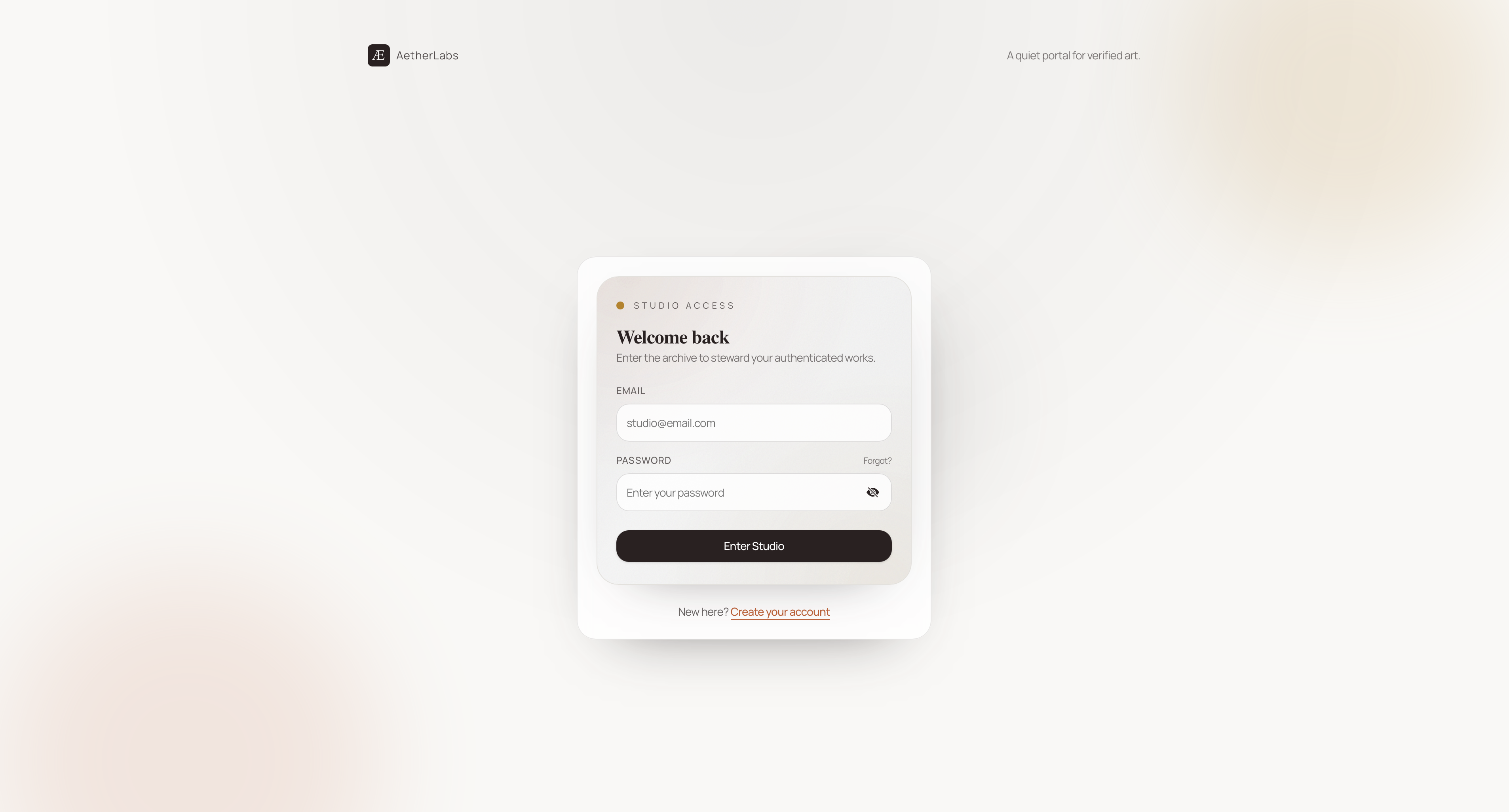
AetherLabs is a business operations platform built specifically for independent artists. The core premise is straightforward: artists are professionals running small businesses, and almost nothing in their existing toolkit was built with that in mind. AetherLabs brings the infrastructure of a proper back office into a single platform purpose-built for how artists actually work, covering inventory, documentation, provenance, and client management.
Context
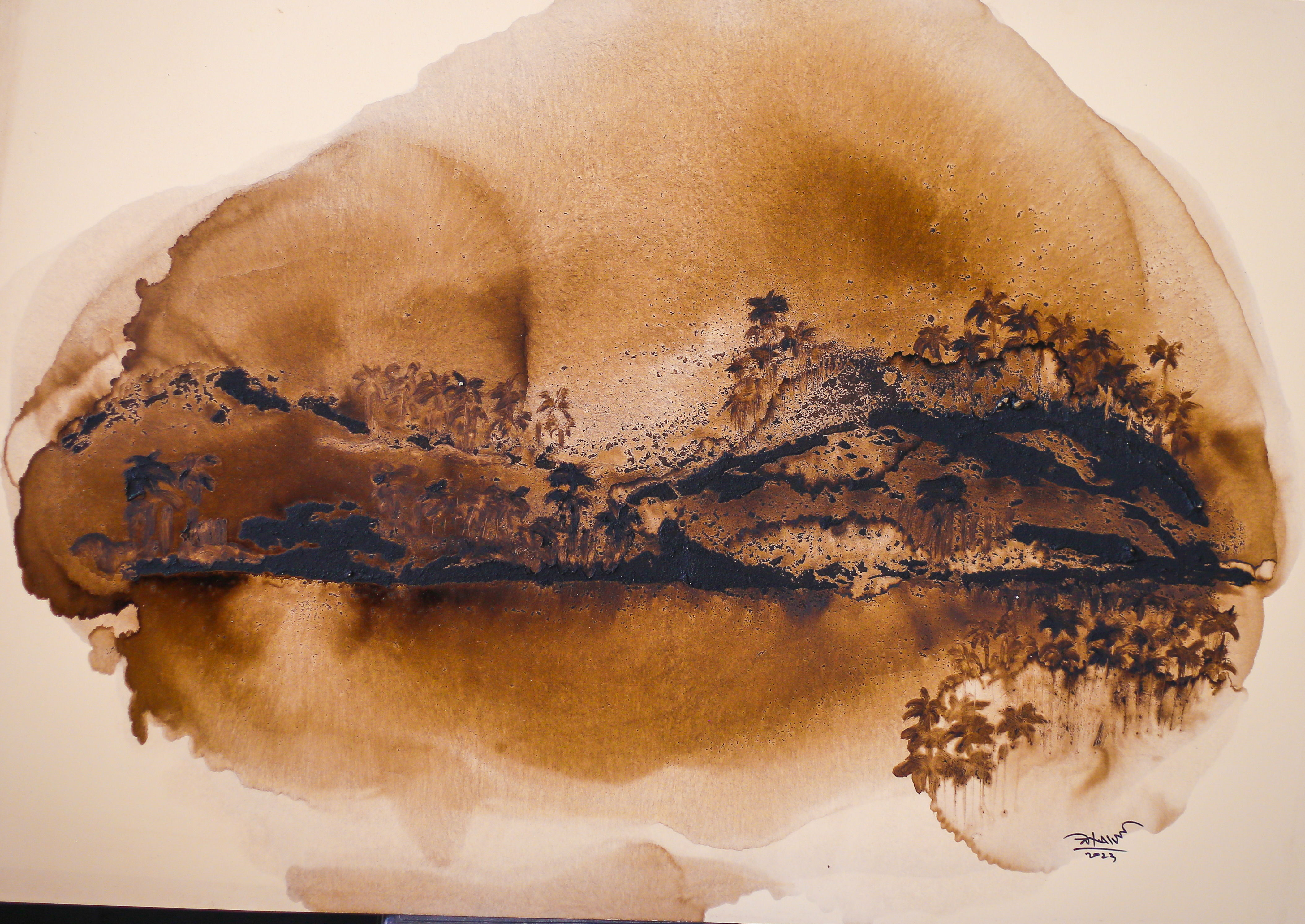
The idea came from a lived observation. My father, Bandu Manamperi, is a Sri Lankan contemporary performance artist. Watching him navigate the administrative side of his practice made the gap between art and business impossible to ignore. Tracking works, managing sales, producing documentation for galleries and grant bodies: the tools available were either generic business software that required heavy adaptation, or niche art-world solutions built for institutions rather than individual practitioners.
This gap is well-documented across the sector. Independent artists, particularly those working without gallery representation, carry the full administrative burden of their practice themselves. CARFAC research and conversations with working artists consistently surfaced the same friction points: disorganised inventory, lost provenance records, no reliable way to prove authenticity, and no clear system for managing client relationships and sales.
Problem
Independent artists lack the infrastructure to run their practice as a business. Inventory lives in spreadsheets that do not scale. Provenance records are scattered across emails, physical folders, and old hard drives. Certificates of authenticity are produced ad hoc. Client relationships are managed through memory and message threads.
The downstream effects compound over time. Works become hard to track across exhibitions and loans, authenticity is difficult to verify without institutional backing, and the administrative burden grows in proportion to the size of the practice.
The artists most affected are often mid-career practitioners: serious enough to have a significant body of work, but without the support staff or gallery infrastructure that larger careers typically bring.
Approach
The design process started with customer discovery rather than feature assumptions. Conversations with CARFAC members, Arts and Business NL contacts, and independent artists helped identify which administrative problems were genuinely painful versus merely inconvenient.
The core insight from discovery was that artists needed a system they could trust to hold their practice's institutional memory, and they needed to be able to onboard existing work without starting from scratch. Making that onboarding simple became a foundational requirement rather than a nice-to-have.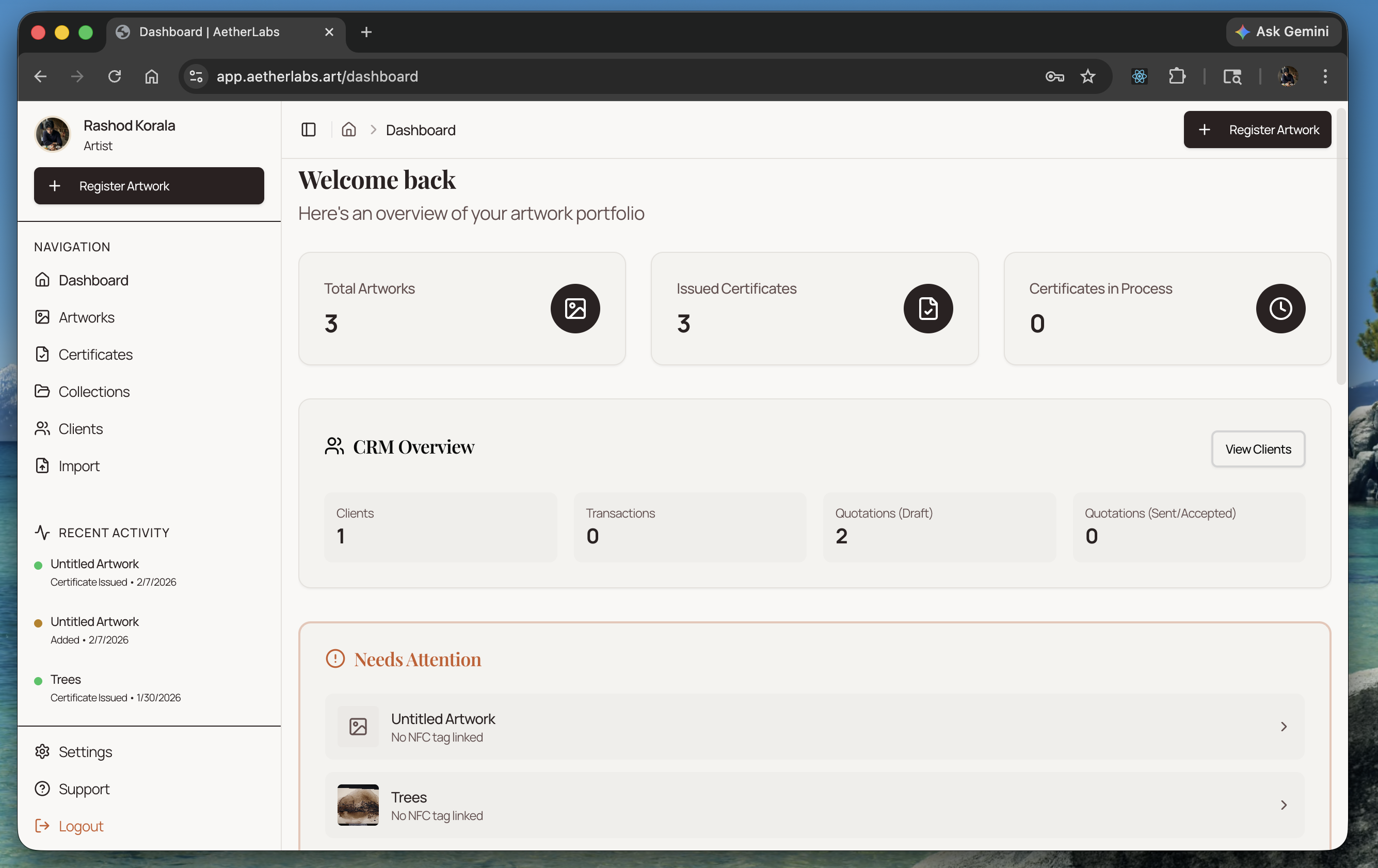
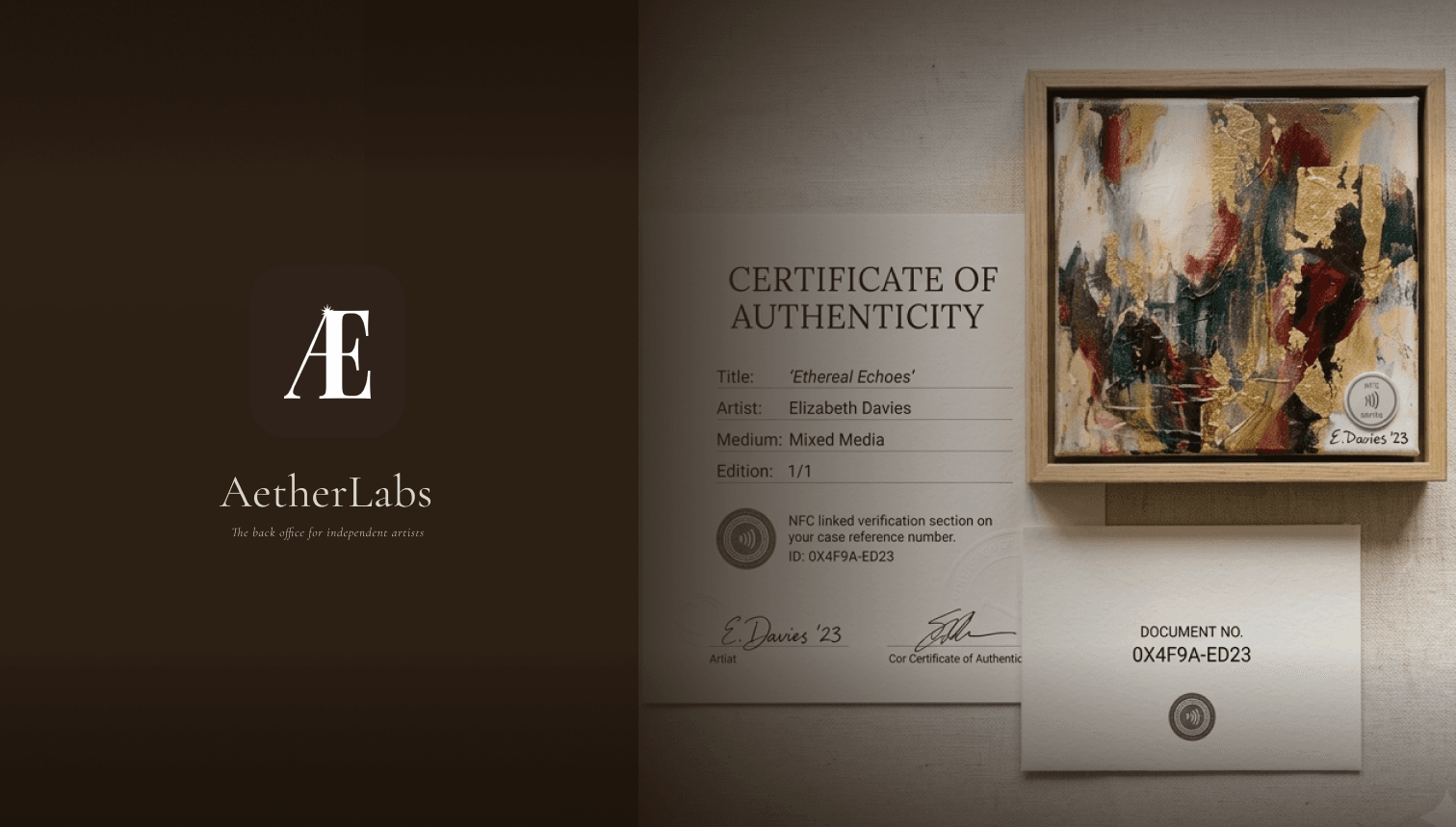
The platform was scoped around three pillars: inventory and catalogue management, provenance and authentication using NFC-embedded tags tied to certificate records, and business operations covering clients, quotes, and invoicing. The architecture reflects this. A React and React Native frontend shares a TypeScript codebase, backed by PostgreSQL for structured records.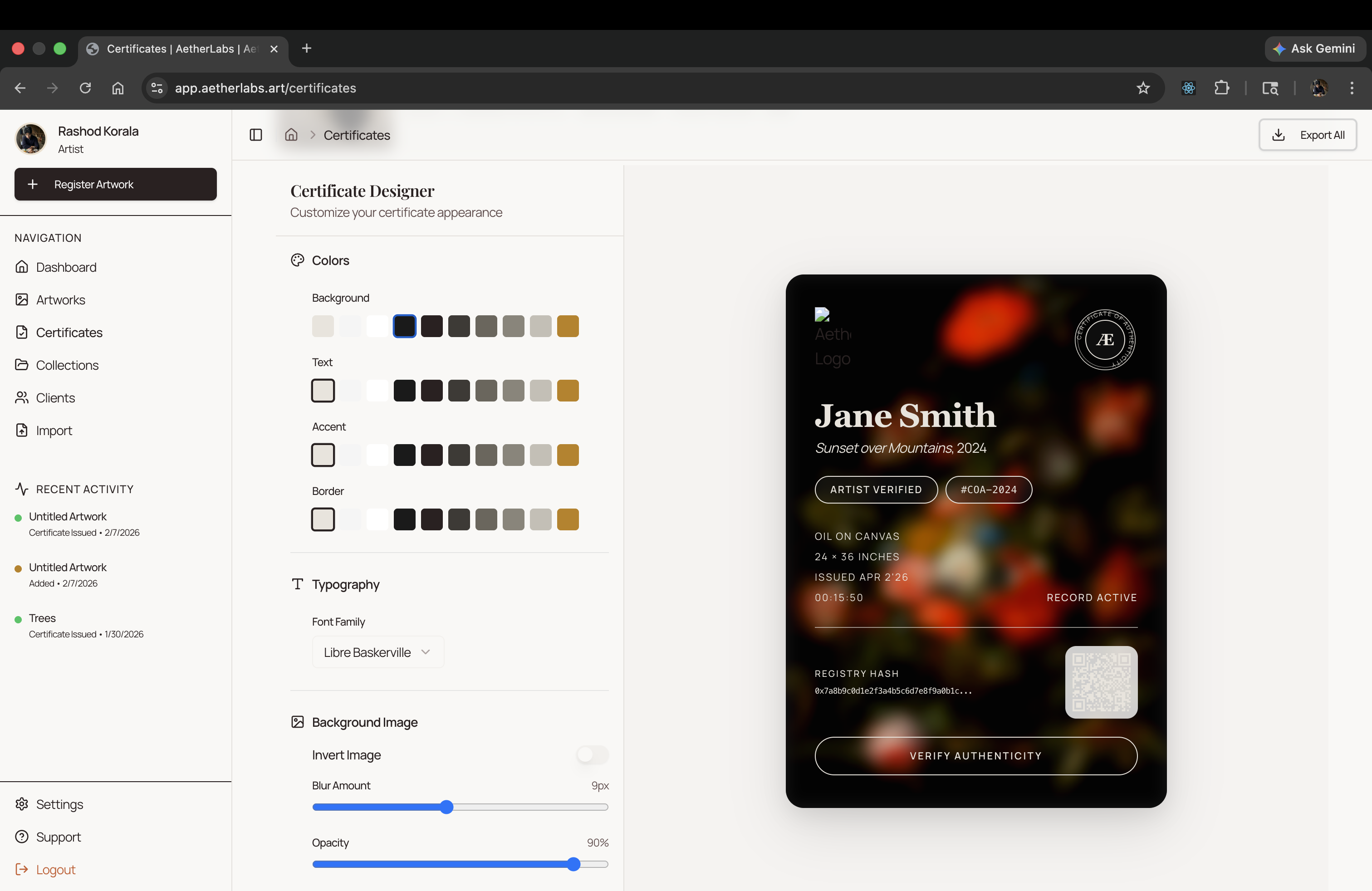
Outcome
AetherLabs is currently in active development, running as a private beta with a small group of invited artists. The platform has attracted inbound interest from practising artists across the Canadian arts sector.
The broader vision is a platform where an artist's entire practice, covering every work, every transaction, and every document, is structured, searchable, and verifiable. Where provenance compounds over time instead of degrading. Where running the business side of being an artist requires the same level of effort as any other professional tool.
Details
| Stack | TypeScript, React, React Native, PostgreSQL |
| Status | Private beta |
| Programme | Genesis Evolve, Winter 2026 |
| Sector | Arts technology |
| Website | aetherlabs.art |
Tools & tech stack